HATECRAFT: compulsion over coherence
The tragedy of the modern West is not that it lost power — it lost composure. A civilization that once prided itself on reason now governs by reflex, jumping at its own shadow and calling the tremor “principle.” For years, Europe and the United States have insisted the world is full of enemies. The truth is far less flattering: the West is full of fear, and fear requires a villain.
So it manufactured one.
Before going further, let’s define the term that anchors this argument.
When I say “hate,” I do not mean personal prejudice or cultural hostility. I mean the institutional pathology of making decisions driven by resentment rather than realism — the strategic spite that prioritizes punishment over preservation, even at self-destructive cost. The kind of bureaucratic fury that sacrifices prosperity for the pleasure of blaming someone else.
Few phenomena illustrate this better than the West’s relationship to Russia.
Russia is not a moral test. It is a structural mirror. And Europe would rather smash the glass than confront its own reflection. The EU’s latest convulsion — the push to seize Russia’s sovereign reserves — is not strategy. It is a tantrum disguised as principle. Brussels expects applause for detonating the very financial architecture that sustains its credibility; Belgium, to its credit, simply asked if everyone had gone mad. For this modest act of sanity, it was treated like a heretic.
This is how late-stage empires collapse: not through invasion, but through humiliation performed as policy.
Cipolla warned: the most dangerous actors harm others and themselves. Europe fits the description. Europe is inching into this quadrant with stunning confidence. A raid on Russian sovereign assets would not merely antagonize Moscow — it would undermine the neutrality of Western custodianship for an entire planet. Capital would not leave in billions. It would leave in continents.
This is not strategy.
This is Cipolla-grade stupidity with a flag.
16 bars for a dying empire:
Hate don’t build —
it breaks.
Don’t plant —
just takes.
It burns the roots,
then blames the trees.
Cuts the branches,
scorns the leaves.
It swings at shadows
to dodge the light.
It can’t fix pain —
so it picks a fight.
Hate builds nothing.
It just rattles the cage —
carves its scorn
into impotent rage.
And it emerges from a deeper panic. The West’s ruling class cannot explain the failures it authored. Austerity hollowed its middle class. Deregulation hollowed its institutions. Financialization hollowed its economies. When a society has been drained this thoroughly, it needs a story to explain the emptiness. Hate is the cheapest narrative available.
Hate is easy. Governance is not.
It is easier to shout about “Russian influence” than to admit that Europe’s political imagination has collapsed. Easier to claim Moscow manipulates elections than to recognize that voters are rejecting a project that no longer serves them. Easier to conjure phantom threats than to confront domestic exhaustion. Russophobia has become the EU’s political duct tape: it disguises incompetence, absolves responsibility, and unifies no one.
Nothing unifies a failing order more efficiently than a villain invented to explain the failure.
But let’s be clear: this is not an attempt to sanctify Russia’s actions. Moscow has pursued strategic aggression where it saw advantage; it protects its interests with a clarity the West once possessed and squandered. But unlike the West, Russia’s behavior fits inside a coherent framework — stability, sovereignty, and a non-hegemonic world where survival depends on reciprocity, not dominance. The world has noticed. That’s why BRICS expanded. That’s why the Global South has drifted toward Eurasia. Not out of ideology, but out of sobriety.
Meanwhile, the West mistakes volume for legitimacy. It rages because it has forgotten how to reason.
When Europe froze Venezuela’s gold, reserves quietly left London. When the Netherlands seized a Chinese firm, markets convulsed. The proposed seizure of Russian assets is not just reckless — it is a referendum on whether Western custodianship is trustworthy. The continent that once sold itself as the world’s safe vault now seems eager to prove it is a hostage-taker instead.
Belgium understood this.
The rest of Europe pretended not to.
The continent that once called itself enlightened now behaves like a cult that believes shouting louder will change the laws of gravity. Hate has become its organizing principle. Not strategy — just heat. Not analysis — just noise.
And in the middle of this spiral sits Russia, conspicuously calm. It does not need to return fire. Europe is torching its own energy security, its industrial base, its diplomatic credibility, and now its financial reputation. If Moscow appears composed, it is because it has mastered the oldest principle of strategic patience: never interrupt an adversary engaged in self-harm.
But this is not a story about Russia.
It is a story about what happens to a civilization that confuses anger with agency.
Reality no longer arranges itself around spheres or poles. The world is non-hegemonic — a landscape of reciprocal necessity where no state can dictate terms without losing ground. Russia and China have adapted to this geometry. The Global South never left it. Only the West clings to the fantasy that the loudest actor wins.
The loudest actor is usually the most afraid.
And so the EU rehearses disaster:
— Alienating partners as if that were strength.
— Confiscating sovereign wealth as if that were justice.
— Ending its own credibility as if that were moral victory.
This is not diplomacy.
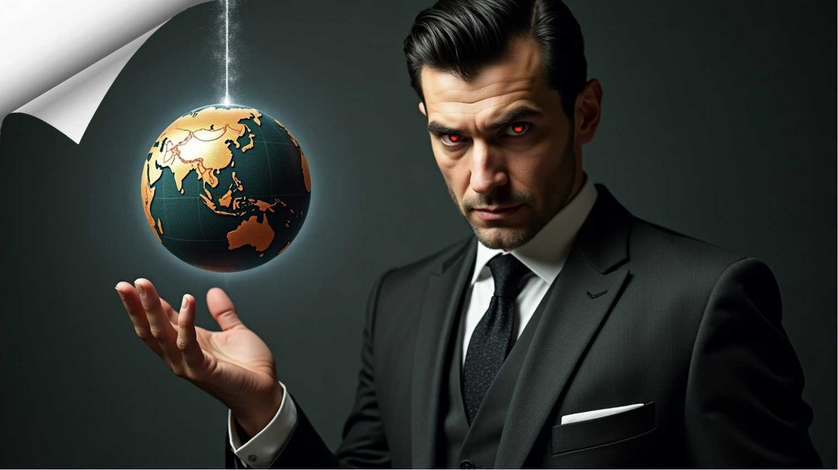
This is hatecraft — the practice of turning insecurity into doctrine and fear into law.
States cannot be governed this way. Not sustainably, not sanely. A society cannot run on spite forever; spite consumes the vessel that carries it. Politicians who wield hate like a torch forget that torches burn holders and targets alike.
The irony is bitter: Russia does not need Europe to fail. It wanted a prosperous Europe it could trade with — a stable neighbor in a world no longer governed by imperial centers. The EU chose hysteria instead. Hate was easier than humility. Scapegoating was easier than self-correction. Denouncing was easier than rebuilding.
But there is no future in this.
Hate does not heat homes.
Hate does not stabilize currencies.
Hate does not create industry.
Hate does not build trust.
Hate is an accelerant.
It burns fast, burns hot — and burns everything.
When historians examine this era, they will not marvel at Russia’s strategic brilliance. They will marvel at Europe’s willingness to dismantle itself rather than acknowledge its era of hegemony had ended. They will not ask why Belgium said no. They will ask why Europe said yes.
And the answer will be simple:
because hate was easier than telling the truth.